Become The Injector Your Patients Actually Trust.
Anti-wrinkle injections + dermal filler. One clinical day. Real patients. 1:5 supervision. £795 — all in.

 JCCP Registered
Pay in 3 interest-free instalments · Free date transfer up to 7 days before
- Pre-course online learning (143 slides + notes)
- Full clinical day on live patients (1:5 ratio)
- Reconstitution drills — toxin & hyaluronidase
- Gateway knowledge assessment before injecting
- Mentorship review of your first 10 cases
- Two laminated emergency cards (VO + Anaphylaxis)
- 12+ CPD points, insurance accepted
Limited to 5 delegates per cohort. Book early.

CPD Certified Course
Verified by The CPD Certification ServiceThis course has been independently assessed and certified by the UK's leading CPD accreditation body. Our training structure, learning objectives and materials meet recognised professional development standards.
Before You Book Any Aesthetics Course
Not all training is equal. Here's what separates credible clinical education from courses that put your patients and your registration at risk.
What Credible Training Looks Like
- Anatomy-led curriculum with vascular mapping Danger zones, facial artery territories, and nerve pathways, all taught before any injection
- Dedicated complications module Ptosis management, diffusion protocols, emergency escalation, and adverse event documentation
- Medico-legal governance and consent frameworks Montgomery consent, duty of candour, material risk disclosure, and registration-protecting documentation
- Clinical environment with real patient contact Clinical setting, direct medical supervision, genuine patients. Not hotel conference rooms
- Trainer with active clinical practice Your trainer still sees patients weekly. Current protocols, real complication experience, practice-informed teaching
Red Flags When Choosing a Course
- Large groups marketed as "premium" or "exclusive" 10+ delegates per trainer means you're observing, not developing injection competence
- "Signature techniques" or "exclusive methods" Evidence-based medicine doesn't have proprietary methods. Question branded injection patterns
- Earning potential prioritised over patient safety "Business development" before clinical governance and complication protocols tells you where their priorities are
- Training in hotels or beauty salons Aesthetic injection is a medical procedure. It requires a clinical environment with emergency protocols
- Trainers who don't run active clinics No ongoing clinical exposure usually means outdated protocols and limited complication experience
We offer a free Complications in Aesthetic Injecting course, open to all healthcare professionals, whether you train with us or not.
From Sign-Up To Your First Independent Patient
You’re not paying for a day. You’re paying for the path — the preparation before, the supervised practice during, and a senior clinician on the end of the phone after.
- Pre-Course
Prepare
You walk into the clinic already knowing the anatomy — so day one is about your hands, not your notes.
- 143-slide deck with full speaker notes
- Printable recap pack to study your way
- Two laminated emergency cards posted to you
- Clinical Day
Inject
Small enough that you cannot hide. Supervised enough that you cannot get it wrong.
- Short knowledge assessment before any injection
- You reconstitute toxin and hyaluronidase yourself
- You consent, mark and treat live patients under 1:5 supervision
- You leave with documented competency sign-off
- Mentorship
Mentored
When your first patient calls you back worried, you have someone to call too.
- Structured review of your first 10 patient cases
- Direct access to complications support during mentorship
- CPD certificate logged — the kind insurers actually accept
Why This Course, By The Numbers
You’re not buying a certificate. You’re buying the difference between “I’ve done a course” and “I can treat a patient on Monday morning and sleep on Sunday night.”
You Actually Inject
You consent, mark and treat real patients on the clinical day. Not fellow students. Not mannequins. Not from the back of the room.
Direct 1:5 supervision · Live patients · Toxin + filler See the pathwayProve It Before You Inject
A short knowledge paper before lunch — toxin and filler. Pass, or you observe, retake and come back another day.
See the syllabusYou Are Not On Your Own
Structured review of your first 10 cases. Direct complications support throughout the mentorship window.
See the pathwayNo Hidden Module 6
Anti-wrinkle + dermal filler in one programme. Most providers split this into two courses costing £1,500–£2,500.
See what’s includedReported eyelid ptosis rates following cosmetic anti-wrinkle treatment range from under 1% in experienced practice to around 2–2.5% in broader clinical studies.
Your Clinical Day, Hour by Hour
Half a day of self-paced online learning before you arrive. Then one full clinical day in London, structured around a single principle: no delegate touches a patient until they have passed the gateway assessment.
Registration, ID & Indemnity Check
ID verification, indemnity confirmation, clinical setup, learning objectives and the safety-first gating structure for the day.
Safety & Science Recap
Focused recap of the pre-course material — high-risk anatomy, vascular danger zones, toxin pharmacology and filler rheology. Built around what the assessment is going to test.
- Layered anatomy and vascular danger zones
- Toxin pharmacology: SNAP-25, onset, peak, duration
- Filler rheology: G', cohesivity, depth-of-placement
Reconstitution & Handling Drills
Hands-on, individually performed reconstitution drills for both botulinum toxin and hyaluronidase. The skills your future patient depends on at 11pm.
- Toxin reconstitution with preservative-free saline
- Hyaluronidase reconstitution and dilution for vascular emergency
- Sharps safety, single-use waste handling and sterile technique
Knowledge Assessment — The Gateway
Two standardised papers, toxin and filler. ≥7/10 in both to progress to live patient injecting. No exceptions.
- Toxin paper: anatomy, pharmacology, complications
- Filler paper: rheology, vascular safety, hyaluronidase protocol
- Fail to pass → observe only, retake at 16:30, return for separate practical within 4 weeks
Live Model Consultation & Plan
Trainer-led demonstration on the first patient model: consultation, BDD-aware screening, photography, marking and treatment planning.
- Validated BDD screening and refusal documentation
- Standardised clinical photography
- Marking, planning and Montgomery-standard consent
Live Patient Injecting — 1:5 Supervision
You consent, mark and inject toxin and filler on live patient models under direct supervision. Every injection observed. Every plan reviewed.
- Toxin: upper face — glabella, frontalis, crow's feet
- Filler: planned treatment using both needle and cannula technique
- Real-time feedback on technique, dose, depth and documentation
Competency Assessment & Certification
Final Q&A, clinical documentation sign-off, competency assessment outcome and award of CPD certificates. Mentorship pathway briefed.
- Practical competency sign-off
- Documentation review
- Mentorship onboarding for first 10 cases
Times are approximate — the day flows naturally based on group pace and questions. Content coverage is guaranteed.
Anti-wrinkle injection–related eyelid ptosis is usually temporary, typically appearing within days of treatment and resolving over several weeks as neuromodulator activity diminishes.
Acute, Late-Onset and Everything in Between
Most courses cover the obvious complications. We cover the ones that ruin reputations months after the appointment — Tyndall, biofilms, late nodules — alongside the acute emergencies you have to manage in the chair.
Vascular Occlusion & Hyaluronidase Escalation
The single highest-stakes filler complication. You will learn early recognition (blanching, disproportionate pain, livedo reticularis), the high-dose hyaluronidase protocol, escalation timing and the documented chain-of-actions that protects both the tissue and your indemnity position.
Lid Ptosis & Brow Ptosis
Levator palpebrae involvement via diffusion across the orbital septum, plus dose-related and diffusion-related brow ptosis. Mechanism, prevention through depth and dose protocols, the typical 2–4 week management timeline and interim measures including apraclonidine.
Tyndall Effect
The bluish hue from superficial hyaluronic acid placement, most often around the tear trough. Anatomy of why it happens (Rayleigh scattering through dermis), how supraperiosteal placement prevents it, and dissolution protocols when it presents weeks or months later.
Late Nodules & Biofilms
Inflammatory vs non-inflammatory nodules, the bacterial biofilm hypothesis, antibiotic-first protocols before considering hyaluronidase, and the differential against granulomatous reactions. The complication that presents months after treatment and demands a structured workup.
Escalation, Documentation & Duty of Candour
Differentiating expected post-treatment response from infection, the conservative-vs-escalate decision, specialist referral pathways, crisis-time documentation and duty of candour obligations under GMC, GDC and NMC standards. The most critical skill in any complication is recognising when you are out of your depth.
Any provider can teach you where to inject. Very few prepare you for the call from a worried patient three months later — the bluish tear trough, the firm nodule under the cheek, the spreading inflammation. The clinical skill that defines a safe injector is the workup for those calls, not the technique on the day.
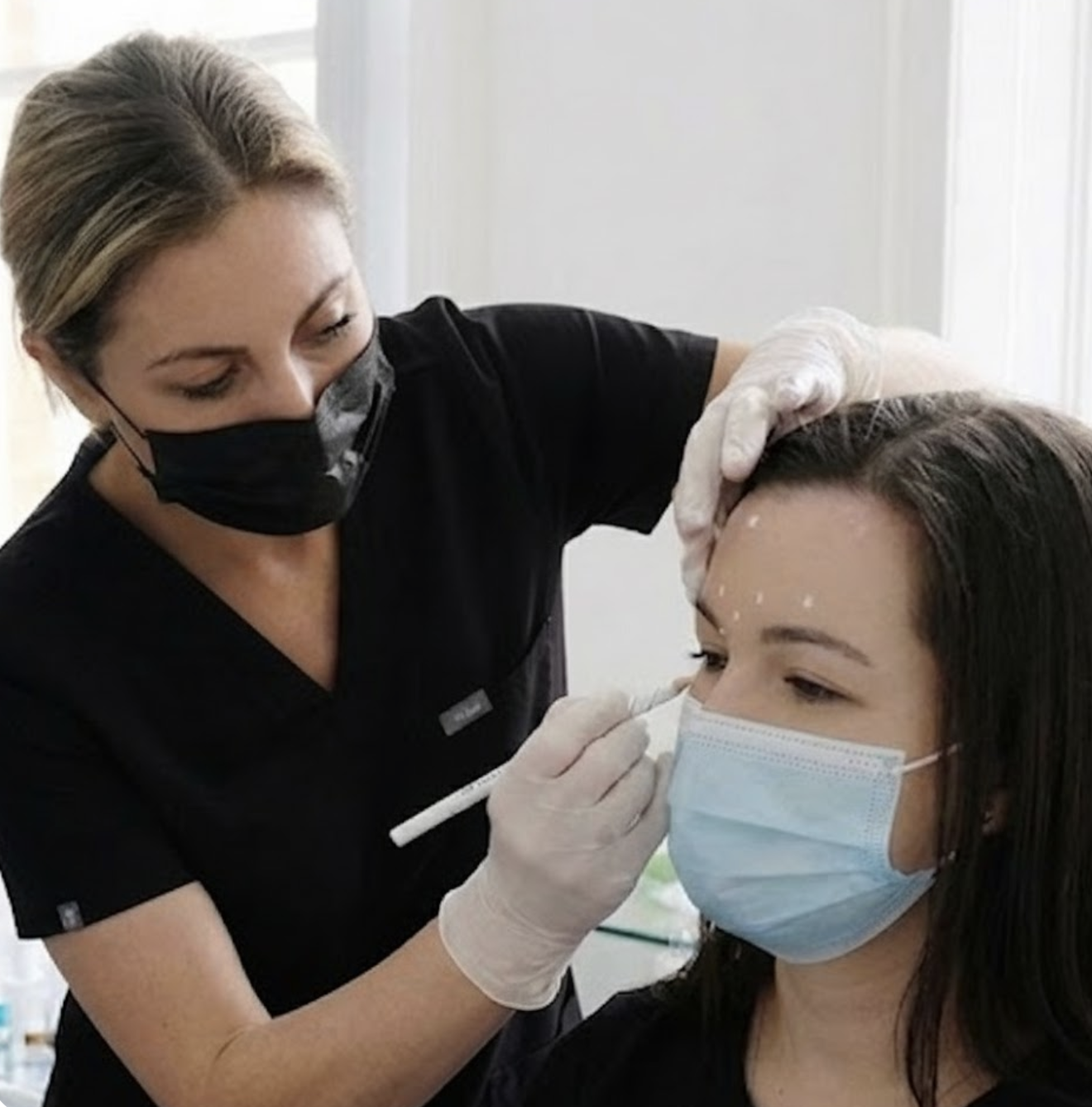
Five Modules. Foundation Level. Both Disciplines.
The pre-course online deck covers the science and anatomy in depth. The clinical day applies it on real patients. Below: the full clinical content the programme is built around.
- The five planes: skin, subcutaneous fat, SMAS, deep fat, periosteum — matching tool and product to depth
- Deep fat compartment loss (deep medial cheek, SOOF, buccal) and its role in midface descent
- Vascular danger zones: temple, nose tip, glabella, tear trough — where the margin for error is minimal
- Critical nerve territories: marginal mandibular, infraorbital and mental nerve protection
- Late-onset complications: Tyndall effect, late nodules, bacterial biofilm management
- Anatomical variation and how it changes real injection risk profiles
Clinical Insight: Anatomy is the entire foundation of safe injecting. We refresh the basics every clinician should know, then layer the advanced anatomy that actually prevents complications in the field.
Clinical studies demonstrate that eyelid ptosis rates decrease significantly with injector experience, reflecting the importance of anatomical knowledge and injection technique.
What You’ll Actually Be Able To Do
Forget vague promises about “confidence.” Three competencies. Nine specific, defensible things you’ll be doing within days of leaving the clinic.
On The Day
- Inject the upper face on Monday morning Consent, mark and treat — without phoning a friend.
- Plan filler: needle vs cannula Tool choice driven by the patient in front of you, not preference.
- Reconstitute under pressure Toxin and hyaluronidase — because vascular occlusion does not wait.
When It Goes Wrong
- Recognise vascular occlusion early Escalate within minutes, not hours.
- Handle the late-night call Bluish tear trough, firm nodule — structured workup, not panic.
- Run the emergency drill Two laminated cards in your kit. You will have used them.
After The Patient Leaves
- Refuse a patient — and document why So the refusal protects you, not the other way round.
- Screen for BDD and red flags Spot the patient you should never have agreed to treat.
- Produce Montgomery-grade records Consent, photography and notes that hold up under JCCP and insurer scrutiny.
Everything in this list is taught, demonstrated and assessed on the day. Nothing here is aspirational.
The Frameworks Behind Every Clinical Decision
Layered Anatomy Drives Tool Choice
Skin, subcutaneous fat, SMAS, deep fat, periosteum. Each plane dictates which product, which needle gauge or cannula size, and which technique you reach for. Tool choice flows from anatomy, not preference.
Treatment Timelines Drive Decisions
These windows determine when to assess outcomes, when a top-up is clinically appropriate, and when an adverse event is genuine versus expected response.
Profile Balance Before Volume
The Ricketts E-line and Steiner line frame how nose, lip and chin sit in profile. Plan from the side view first — that single discipline turns "more filler" into a coherent staged plan that preserves identity.
Screening Before Treatment
Validated BDD screening (the condition affects an estimated 9–15% of cosmetic patients), motivation history, prior dissatisfaction, and medication review. The assessment that determines whether you treat at all — before any plan is drawn.
Dr Nikita is the founder of Dr Nikita Facial Aesthetics, a fully private London clinic she opened in 2017. She has spent the last decade injecting full-time — toxin, dermal filler by needle and cannula, lip enhancement, thread lifting and hyaluronidase-led complication management — placing her among the most experienced injectors actively teaching in the UK today.
“Anatomy first, patient safety always, outcomes that age well. New injectors should master the structured fundamentals before they touch anything advanced — and complication recognition is taught alongside the procedure, never after it.”
— Dr Nikita Nirwan
What Dr Nikita personally does for you
- 1 Reviews your knowledge paper before you inject. If you don’t pass ≥7/10 in toxin and filler, you observe — nobody bluffs through to a patient.
- 2 Stands beside you for every injection. 1 trainer to 5 delegates. You consent, mark and treat under direct supervision — toxin and filler.
- 3 Takes your complications calls afterwards. Through your mentorship window. The bluish tear trough at 9pm gets a senior clinician on the phone — not a voicemail.
JCCP Verified
Dr Nikita is registered with the Joint Council for Cosmetic Practitioners — the UK's professional standards authority accredited by the Professional Standards Authority for Health and Social Care.
One Fee. Everything In. Nothing Held Back For “Advanced”.
If you’ve been quoted £1,500 elsewhere, here’s the unfiltered breakdown of what your money buys with us — and what it usually doesn’t buy with everyone else.
What’s Included In Your £795
Single fee- Pre-course online learning (143-slide deck + speaker notes) Included
- Printed delegate recap pack Included
- Two laminated emergency cards (VO + Anaphylaxis) Included
- Knowledge assessment (toxin + filler papers) Included
- Reconstitution drills — toxin & hyaluronidase Included
- Live patient supervised injecting — 1:5 ratio Included
- Models provided (1 per delegate minimum) Included
- Mentorship review of your first 10 patient cases Included
- Complications support during mentorship period Included
- CPD certificate (12+ points) — insurance-ready Included
AGN Academy vs Other Providers
For Registered Healthcare Professionals
This course is open to clinicians with current professional registration. We teach within your scope of practice and help you document your clinical governance framework.
Doctors
GMC registeredDentists
GDC registeredNurses
NMC registeredPharmacists
GPhC registeredDental Therapists
GDC registeredParamedics
HCPC registeredNote: For anti-wrinkle injections, prescriber status or access to a prescriber is required.
Accredited, registered, accepted by every major UK aesthetic insurer
Your CPD-accredited certificate is recognised by every major UK aesthetic insurance provider. We help newly trained practitioners get cover.
Book Your Place on Our Next Course
Can't make these dates? Contact us to be notified of new dates or arrange private training.
Everything You're Wondering — Answered
Switch between the practical course questions and the things every clinician privately worries about before their first aesthetics course.
Clinical references & supporting evidence (6)
- Rengifo-Palacios, J.A., Macías-Arias, P.A. and Uribe-Posada, M.P. (2025)Iatrogenic Blepharoptosis: Multimodal Management and Treatment Technique With Botulinum Toxin Type A.
- Steinsapir, K.D. et al. (2022)Botulinum toxin–induced blepharoptosis: anatomy, etiology, prevention and therapeutic options.
- Kowalczyk, E. et al. (2024)Ophthalmological Complications of Aesthetic Medicine Procedures: A Narrative Review.
- Carruthers, J. et al. (2016)Global Aesthetics Consensus: Botulinum Toxin Type A – Evidence-Based Review.
- StatPearls Publishing (2023)Botulinum Toxin Treatment of the Upper Face.
- Zagui, R.M., Matayoshi, S. and Moura, F.C. (2008)Adverse effects associated with facial application of botulinum toxin: systematic review with meta-analysis.
Before you book a course,
learn the complications first.
Get instant access to Dr Nirwan's free online Complications in Aesthetic Injecting course — 12 mechanism-based modules covering the emergencies every injector must recognise and treat.
- Vascular compromise & occlusion
- Hyaluronidase emergency protocol
- Nerve injury & motor deficits
- Tyndall, nodules & granulomas
- Eyelid, brow & lip ptosis
- +7 more critical complications
One Day. One Fee. The Career You’ve Been Telling Yourself You’ll Start.
You’ve thought about this for months. Anti-wrinkle injections + dermal filler. Real patients. 1:4 supervision. Mentorship for your first 10 cases. Documentation that protects your registration. £795 — what others split into £1,500–£2,500 of separate courses, with no second invoice.
Questions? Speak directly to Dr Nirwan on 07XXX XXX XXX or email info@agnacademy.com